


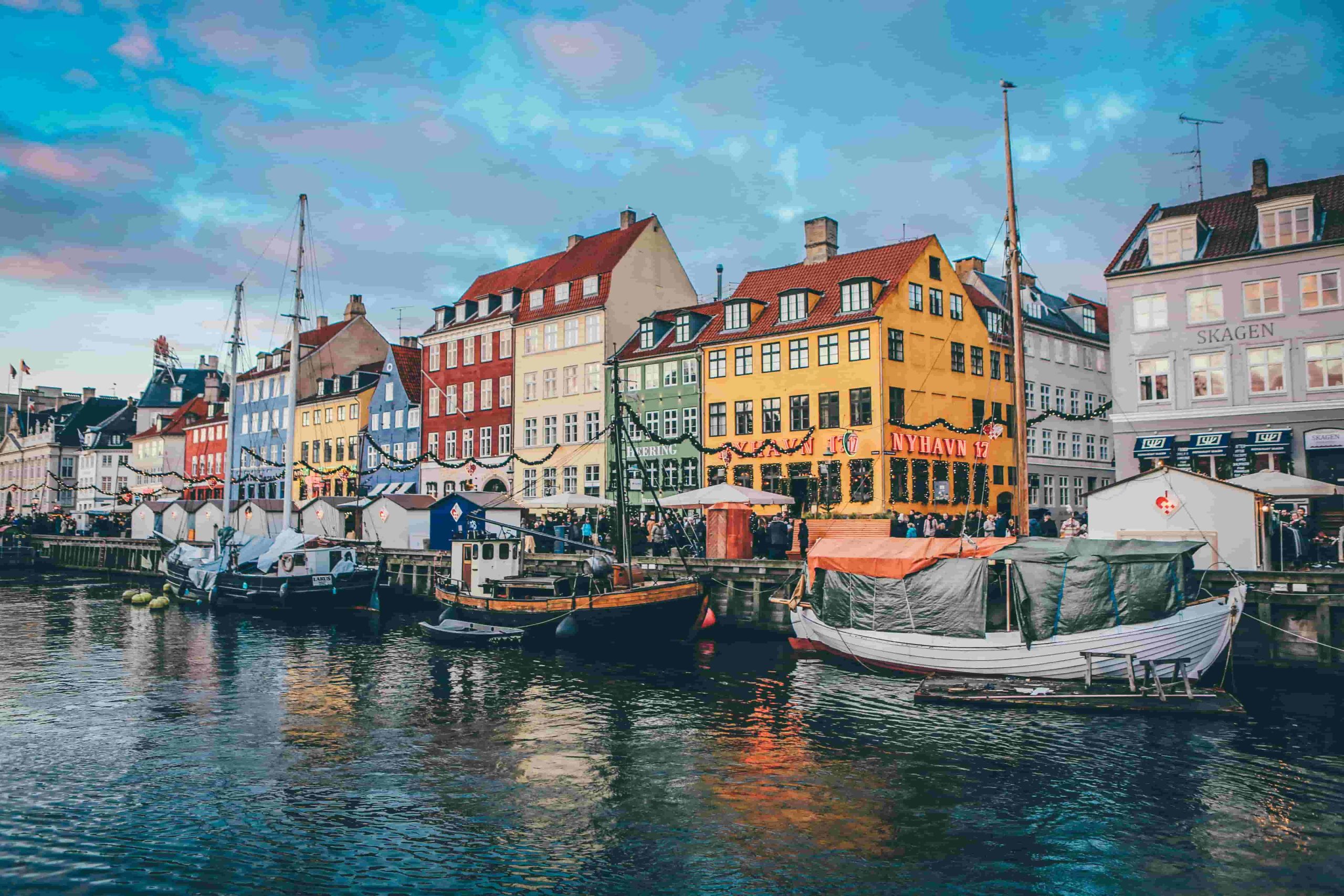
How Denmark’s Capital is Redefining What a Green City Moves Like
Copenhagen is the city that made the world rethink how urban transport should work. Not by building the biggest metro, or the fastest trains — but by building a city where the bicycle is king, and where every other mode of transport exists to make cycling even easier. In Copenhagen, the metro doesn’t compete with the bike. It completes it.
The result is one of the most liveable, sustainable, and imitated urban mobility systems on earth — and it is still being built.
The Vision: 75% of All Trips, Without a Car
Copenhagen’s ambition is straightforward and remarkable in equal measure: 75% of all trips in the city should be made on foot, by bike, or by public transport. The car is not banned — but it is deliberately inconvenient, outnumbered, and outpaced on almost every route through the city.
The efforts are already working. Even as Copenhagen’s population and the number of registered cars have grown, car traffic volume has not increased — a rare achievement for any major European capital. The city is on track toward its goal, and it keeps investing to stay there.
The Metro: Fully Automated, Always Running
Copenhagen’s metro launched in 2002 and has expanded steadily ever since. It is operated by Metro Service A/S and is notable for one striking feature: it runs 24 hours a day, 7 days a week — one of very few metro systems in the world to offer genuinely round-the-clock service.
The network currently consists of four lines:
- M1 and M2 — the original lines, running from Vanløse and the Airport respectively through the city centre and down to Frederiksberg and Amager.
- M3 (City Circle Line) — opened in 2019, adding 17 stations in a loop around the inner city. The M3’s opening immediately brought over 100,000 new daily passengers to Copenhagen’s public transport network.
- M4 — the newest operational line, with extensions completed in 2024 connecting the southern parts of the city to the metro network and giving residents broader access across the system.
Every line in the Copenhagen metro is fully automated and driverless — no drivers, no human error, just precise, quiet, electric trains running every few minutes around the clock. Trains arrive every 2–4 minutes during peak hours, and the stations are clean, spacious, and designed to a consistently high architectural standard.
Bikes and Metro: A Partnership, Not a Competition
What makes Copenhagen’s transit model genuinely unique is how deeply the metro is integrated with cycling infrastructure.
In most cities, cycling and public transport are treated as alternatives. In Copenhagen, they are designed as a seamless pair. Traffic patterns are sometimes deliberately engineered so that a journey from A to B is faster by bike than by car. Wide, one-way cycle lanes run beside major roads with their own traffic lights. Bike parking is abundant at every metro and S-train station. Trains, metros, and buses all allow bicycles on board (outside rush hours).
The effect is visible everywhere: young and old, suited and casual, everyone cycles — and many combine it with a metro or suburban train ride for longer distances. The city’s City Bike scheme adds a final layer, providing shared bikes at transit hubs for first-and-last-mile connectivity.
This philosophy — that cycling and transit reinforce each other — is Copenhagen’s most exportable lesson.
What’s Being Built: The M5 Line
Copenhagen’s biggest current mobility project is the M5 — a major new metro line that reached a landmark political agreement in March 2025, with approval to build a 16-kilometre section running from Copenhagen Central Station to the new urban development area of Lynetteholm, via Amager.
Key details:
- 9 new stations along the approved stretch
- 14 new trains to be introduced
- Designed with a 20% reduction in CO₂ emissions compared to previous metro lines, embedded from the earliest engineering stages
- A scalable system built for future expansion — the Control and Maintenance Centre is designed for 15 trains but can expand to 50
- The full M5 plan includes two phases with a total of 9 stations, unlocking development in eastern Copenhagen and potentially enabling a future cross-border metro link to Malmö, Sweden
The M5 is part of Copenhagen’s response to a projected population increase of approximately 130,000 residents by 2050. The city is not waiting for the pressure to arrive — it is building ahead of it.
Looking Further: Eight More Lines on the Drawing Board
In May 2025, a coalition of Copenhagen’s political parties agreed to initiate feasibility studies for eight additional metro lines — a scale of ambition that would fundamentally reshape the city’s transit geography.
Among the proposed lines:
- Extensions of M1/M2 to Tingbjerg in the northwest
- Extensions of M4 to Hvidovre Hospital and Emdrup in the north
- A branch of M5 to Tingbjerg
- Most boldly, an Øresundsmetro — a cross-border metro line connecting Copenhagen to Malmö in Sweden, creating what would be one of the world’s only international urban metro connections
If even a fraction of these lines are built, Copenhagen’s metro network would become one of the most comprehensive in Northern Europe.
The Driverless Future: S-Trains Go Autonomous
Automation isn’t stopping at the metro. In 2024, Copenhagen announced plans to introduce driverless trains across its S-Bane commuter rail network by 2030, as part of a modernisation contract valued at approximately €3.5 billion covering over 200 new trains. This would extend the driverless, fully automated experience from the metro to the wider suburban network — a transformation in scale that few cities anywhere have attempted.
Sustainability Embedded in Every Decision
Copenhagen’s climate ambitions are as serious as its transport ambitions. The city has set a target of carbon neutrality and targets all new private car sales to be electric by 2030. The electric bus fleet is expanding rapidly. Metro stations of the future are being designed using the 3Rs principle — reduce, reuse, recycle — with architects proposing wood-supported structures over concrete and biomaterials instead of conventional finishes.
Even the stations are being reimagined as mobility hubs — integrating secure cycle parking, parcel centres, shared bikes and scooters, and public amenities directly into metro station shafts, making every station a destination, not just a stop.
Lessons From Copenhagen
1. Design the bike into the system from the start Copenhagen doesn’t bolt cycling onto transit as an afterthought — the whole city is engineered so bikes and public transport work as one. Wide lanes, integrated ticketing, bike-friendly trains, and cycle parking at every station make the combination effortless.
2. 24/7 service changes everything A metro that never closes is a metro people trust. Knowing the train will be there at 3 AM on a Tuesday removes the anxiety that pushes people toward cars.
3. Automation is not the future — it’s the present Copenhagen’s metro has been fully driverless since it opened in 2002. Twenty years of safe, reliable, automated operation proves this model works at city scale.
4. Build ahead of demand The M5 is being built for residents who haven’t moved to Copenhagen yet. Long-horizon planning — designing for 2050 today — is how cities avoid the crises they otherwise spend decades recovering from.
5. Carbon must be designed in, not added on The M5’s 20% CO₂ reduction target was set at the concept design stage, not retrofitted after the fact. Sustainability is most effective — and cheapest — when it’s embedded from the first drawing.
The Bigger Picture
Copenhagen is not the world’s largest transit system, or its oldest, or its most complex. But it may be the world’s most coherent — a city where every mode of transport, from the pedal to the platform, has been thought through together as a single, integrated vision of how people should move.
For cities struggling with congestion, emissions, and inequality, Copenhagen’s message is quietly radical: the car is not inevitable. With the right infrastructure, the right integration, and the right political commitment, people will choose to move differently.
They already are.
In Copenhagen, the most advanced piece of urban mobility technology isn’t the driverless metro. It’s the bicycle — and the city built everything else around it.Share