


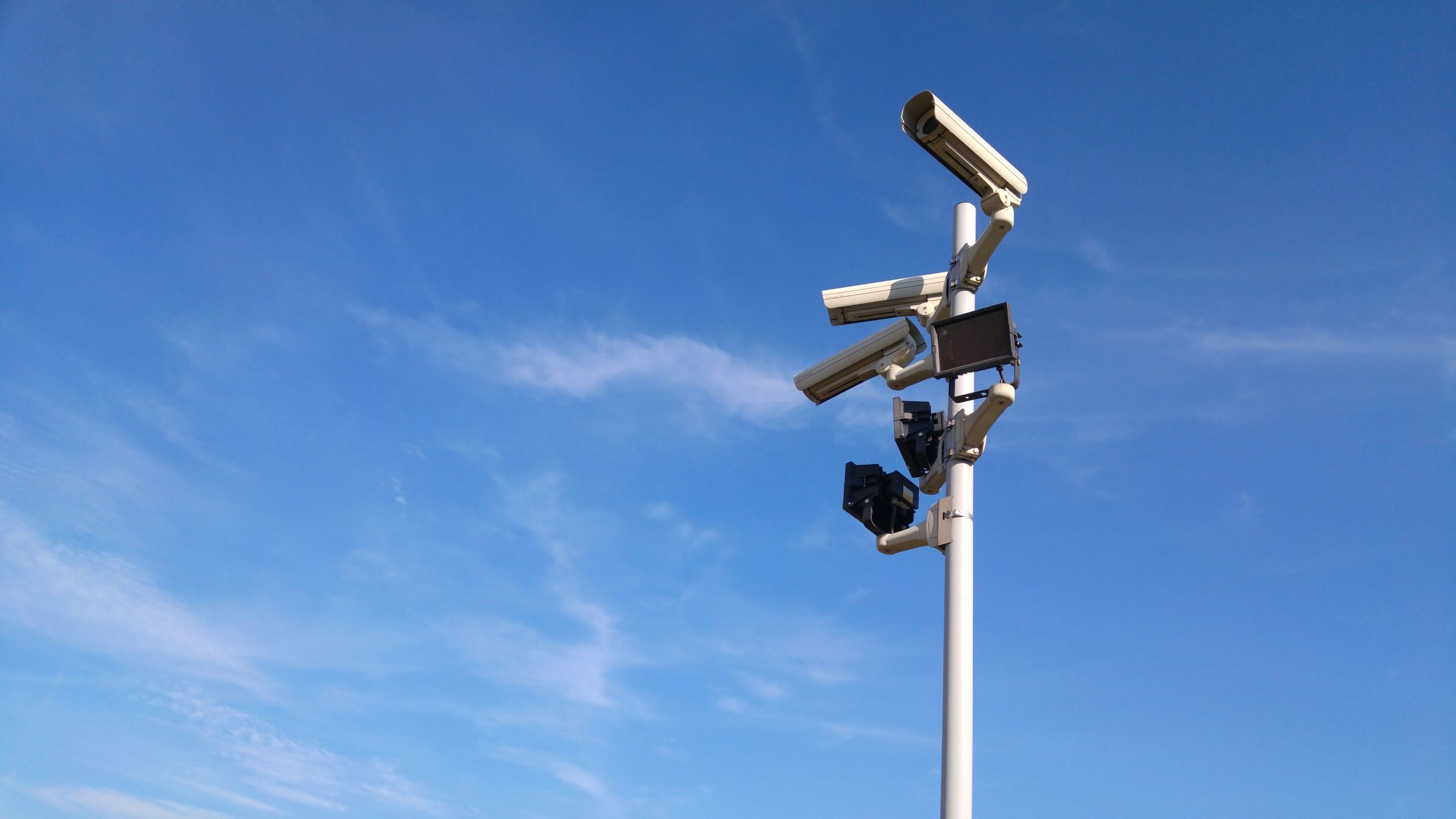
In the evolving security landscape of 2025, banks, enterprises, and institutions are increasingly migrating from legacy CCTV systems toward cloud-based AI video surveillance solutions. These systems combine real-time video analytics, automatic anomaly detection, and scalable remote management to deliver proactive security rather than passive recording.
Cloud-based AI video surveillance — often delivered as Video Surveillance-as-a-Service (VSaaS) — reduces the need for heavy on-site infrastructure, enables centralized control across multiple locations, and applies artificial intelligence to detect threats intelligently. In this article, we highlight 4 leading cloud-based AI video surveillance companies in 2025.
The goal: help decision makers in banking and high-security environments choose a provider that fits both risk and compliance demands.
What Makes a Top Cloud AI Video Surveillance Provider in 2025?
Before diving into company profiles, here are the key capabilities and criteria that separate leading vendors from average ones:
- True cloud-native architecture — no large on-site servers or clunky bridges; leverage scalable storage and compute in the cloud.
- Edge + cloud hybrid processing — ability to run AI models at the edge (on camera or local device) and in the cloud, to reduce latency and bandwidth.
- Strong AI analytics — behavior detection, object classification, facial recognition (if compliance permits), license plate reading, loitering detection, intrusion alerts, etc.
- Security, privacy, compliance — encryption (data at rest and in transit), secure API, access control, audit logs; compliance with local data laws (e.g. GDPR, banking regulations).
- Interoperability & open APIs — integrating with existing cameras, VMS systems, access control, alarms; support for ONVIF or open standards.
- Scalability & multi-site management — ability to manage thousands of cameras across branches from a unified dashboard.
- Reliability & redundancy — redundancy in cloud infrastructure, robustness against outages, fallback to local storage if network is cut.
- Cost-effectiveness & licensing model — transparent pricing, no hidden license fees for devices, flexible subscription tiers.
With that framework, let’s examine four prominent players gaining traction in 2025.
1. Eagle Eye Networks
Eagle Eye Networks is among the most established players in the cloud video surveillance market. It offers a full cloud-managed video system with AI analytics, open APIs, and global reach.
Key advantages:
- Scalable cloud platform: Supports adding new cameras or sites dynamically, without needing on-site servers.
- AI analytics suite: Includes features like license plate recognition, object detection, behavior tracking, motion alerts.
- Open API & integrations: Encourages third-party integrations into other systems (access control, alarm systems).
- Global footprint: Has deployments across 80+ countries, with diversified infrastructure and international support.
Considerations & Challenges
- Because it is “cloud-first,” in regions with constrained bandwidth, performance may degrade unless edge-caching or hybrid modes are used.
- Camera compatibility and migration from legacy systems may require planning.
- As with any cloud provider, vigilance is needed on data residency, encryption, and legal compliance.
2. Coram
Introducing coram as an option is timely — the company is gaining attention as an AI-native physical security platform built for the cloud era.
Overview & Strengths
- Coram is hardware-agnostic, meaning it can work with existing IP cameras without forcing a full rip-and-replace.
- It offers AI-powered video analytics, such as natural language video search (“Discover”), license plate reading, behavior alerts (gun detection, slip/fall), and facial recognition, all managed via cloud.
- It integrates video, access control, and emergency management in a unified platform.
- Coram claims to be SOC2 Type II audited and emphasizes strong encryption, role-based access, multi-factor authentication, and privacy-aware operation.
- The company recently closed a USD 13.8 million Series A investment, indicating growth and confidence in its model.
Potential Challenges / Caveats
- Because it’s relatively newer compared to legacy incumbents, long-term operational track record in large banking or critical infrastructure may be less proven.
- Some users have questioned the visibility of independent third-party reviews or real-world large-scale deployments.
- As with any cloud-reliant system, connectivity interruptions must be addressed — fallback local buffering or edge AI is essential.
Given these strengths and challenges, Coram is an exciting option — especially for organizations seeking a modern, flexible, and AI-native architecture.
3. 3dEYE
3dEYE is a “pure cloud” video and AI platform that claims to eliminate the need for on-premises servers or bridges. It is camera-agnostic and designed for multi-site deployments.
Key strengths:
- Serverless model: No additional hardware required at branch sites, which reduces maintenance overhead.
- AI-driven proactive security: Proactive alerts and analytics rather than retrospective review.
- Multi-device support: Supports body-worn cameras, drones, IoT cameras alongside fixed cameras.
- Ease of scaling: Designed for enterprises with dozens to hundreds of branches, simplifying rollout.
Considerations:
- Pure cloud architecture requires reliable network connectivity — outages affect real-time monitoring.
- Latency-sensitive tasks (e.g. instant threat detection) need intelligent edge buffering or fallback.
- Data jurisdiction and governance become crucial for international operations.
4. Cloudastructure
Cloudastructure offers cloud video surveillance with AI analytics plus remote guarding services (i.e., real-time monitoring and intervention).
Strengths include:
- AI + human in the loop: The remote guarding service means alerts can be escalated and actioned in real time, beyond just alerts.
- Seamless integration: The platform manages both video and alarm responses in a unified system.
- Flexible deployment: Suitable for commercial, multifamily, and campus use cases — adaptable to varying security needs.
- Reduces guard costs: Because of proactive AI detection, fewer guards may be needed on the ground.
Challenges:
- For high-security banking settings, remote guarding must satisfy strict SLAs and reliability guarantees.
- Integration with internal security ops and chain-of-custody for evidence must be carefully managed.
- In very sensitive installations, a fully “remote” model may raise trust or audit concerns.
How to Choose the Right Vendor (for a Bank or Financial Institution)
Criteria & Steps for Selecting a Provider (for Banks)
Here’s a refined checklist and roadmap specific to banking or financial-sector deployment:
- Regulatory & Data Residency Compliance
- Ensure the provider supports video data stored within your country or jurisdiction where required.
- Ask for encryption (in transit and at rest), secure APIs, and strong access control.
- Confirm audit logging and chain-of-custody features.
- Latency & Edge / Buffering Strategy
- Real-time detection (e.g. forced entry, ATM tampering) demands sub-second latency.
- Ensure the system supports local AI inference or buffered recording when connectivity drops.
- Confirm buffering capacity and synchronization behavior.
- Regulatory & Data Residency Compliance
- Ensure the provider supports video data stored within your country or jurisdiction where required.
- Ask for encryption (in transit and at rest), secure APIs, and strong access control.
- Confirm audit logging and chain-of-custody features.
- Scalability & Multi-Site Management
- Does the system allow unified control across dozens or hundreds of branches?
- Are role-based access, hierarchical permissions, and reporting functions built in?
- How easy is branch onboarding?
- Reliability, SLAs & Redundancy
- What uptime, data availability, and reconnection guarantees are provided in the SLA?
- Does the vendor offer fallback local storage or redundant cloud paths?
- How do they handle network partitions or branch-level outages?
- Security Posture & Vendor Trust
- Review vendor certifications (e.g. SOC2, ISO27001) and third-party security audits.
- Ask about past incidents or breaches, vulnerability handling, monitoring, and threat response.
- Validate access controls, multi-factor authentication, and internal separation of duties.
- Evidence & Forensics Capabilities
- Ensure tamper-evident video storage, versioning, export with chain-of-custody logs.
- Check capability for redaction (if required by privacy laws) and secure archival.
- Does the system support forensic investigations across branches?
- Cost Transparency & Licensing
- Are hardware, analytics, and cloud services bundled or separated?
- Understand how costs scale with more cameras, longer retention, or higher resolution.
- Negotiate pilot / proof-of-concept costs to validate before full deployment.
- Support, Monitoring & Operations
- 24/7 support, health monitoring, remote diagnostics are essential.
- Ask for incident response times, escalation procedures, and field support capabilities.
- Confirm training, documentation, and onboarding support.
- Pilot / Proof-of-Concept Deployment
- Start with a few critical branches or use-case areas (e.g. ATM vestibules, drive-throughs).
- Measure latency, false alarm rate, ease of use, integration, and operational usability over several months.
- Use learnings to refine configuration, thresholds, and deployment strategy.
Real-World Use Cases & Best Practices
- Branch rationalization: Banks with hundreds of branches can transition from local DVRs to a centralized cloud system to reduce hardware maintenance and unify monitoring.
- ATM vestibules & drive-throughs: Use AI detection to monitor suspicious behavior (loitering, forced entry) and trigger immediate alerts.
- Cross-branch investigations: With a cloud-based system, regional security teams can search historical footage across branches quickly.
- Remote unlocking / door override: Integration with access control can allow remote lockdown or unlocking based on video cues.
- Insider detection: Combining video with access logs to flag anomalies, e.g. employee entering after hours or accessing vaults outside normal schedules.
Adopt a layered approach: cloud AI video surveillance is a powerful layer, but should be complemented by access control, intrusion detection, security operations, and staff training.
FAQs
Is cloud-based AI video surveillance safe for banks, given data sensitivity?
Yes, if designed properly. Leading providers encrypt video in transit and at rest, enforce strong access controls, isolate video networks, support data residency (keeping data within the country), and maintain audit trails. The institution must audit vendor security and enforce SLAs.
What happens if internet connectivity fails in a branch?
Good systems support local buffering (storing recent video locally), edge analytics (camera-side inference), and synchronization to the cloud when connectivity resumes. Some solutions degrade gracefully rather than failing entirely.
Do I need to replace all existing cameras?
Not necessarily. Many cloud AI systems are camera-agnostic and can overlay AI on existing IP cameras via edge modules or adapters. However, older analog or very low-resolution cameras may become performance bottlenecks.
How real-time are AI detections?
In well-engineered systems, alerts can be delivered in sub-second latency. To achieve that, part of the analytics often occur at the edge, with cloud acting as aggregator or failover.
How costly is migrating from legacy CCTV to cloud AI surveillance?
Costs depend on scale, hardware compatibility, network upgrades, and licensing. But savings accrue via reduced maintenance, no server hardware per branch, unified management, and fewer staff overheads over time.
Can these systems handle regulatory audits and forensics?
Yes. Quality platforms support tamper-evident recording, chain-of-custody exports, audit logs, and secure archival. But you must verify these features with the provider for your jurisdiction.
Final Takeaway
In 2026, banks seeking to modernise their surveillance capabilities should focus on cloud-based AI video solutions that can see, analyze, and act — not just record. Among the many vendors, Eagle Eye Networks, Coram, 3dEYE, and Cloudastructure stand out for combining cloud scalability, intelligent analytics, and operational reliability.
- Choose a vendor whose architecture aligns with your priorities (pure cloud vs hybrid vs human-assisted).
- Rigorously assess latency, redundancy, compliance, integration, and vendor trustworthiness.
- Start with pilot projects in critical branches to validate performance under real conditions.
- Plan your security architecture holistically—video is one piece in a broader converged security ecosystem.
The transition to cloud-based AI video surveillance is not just a technology upgrade — it’s a strategic leap toward proactive, scalable, and intelligent security for banks in a fast-evolving threat landscape.