


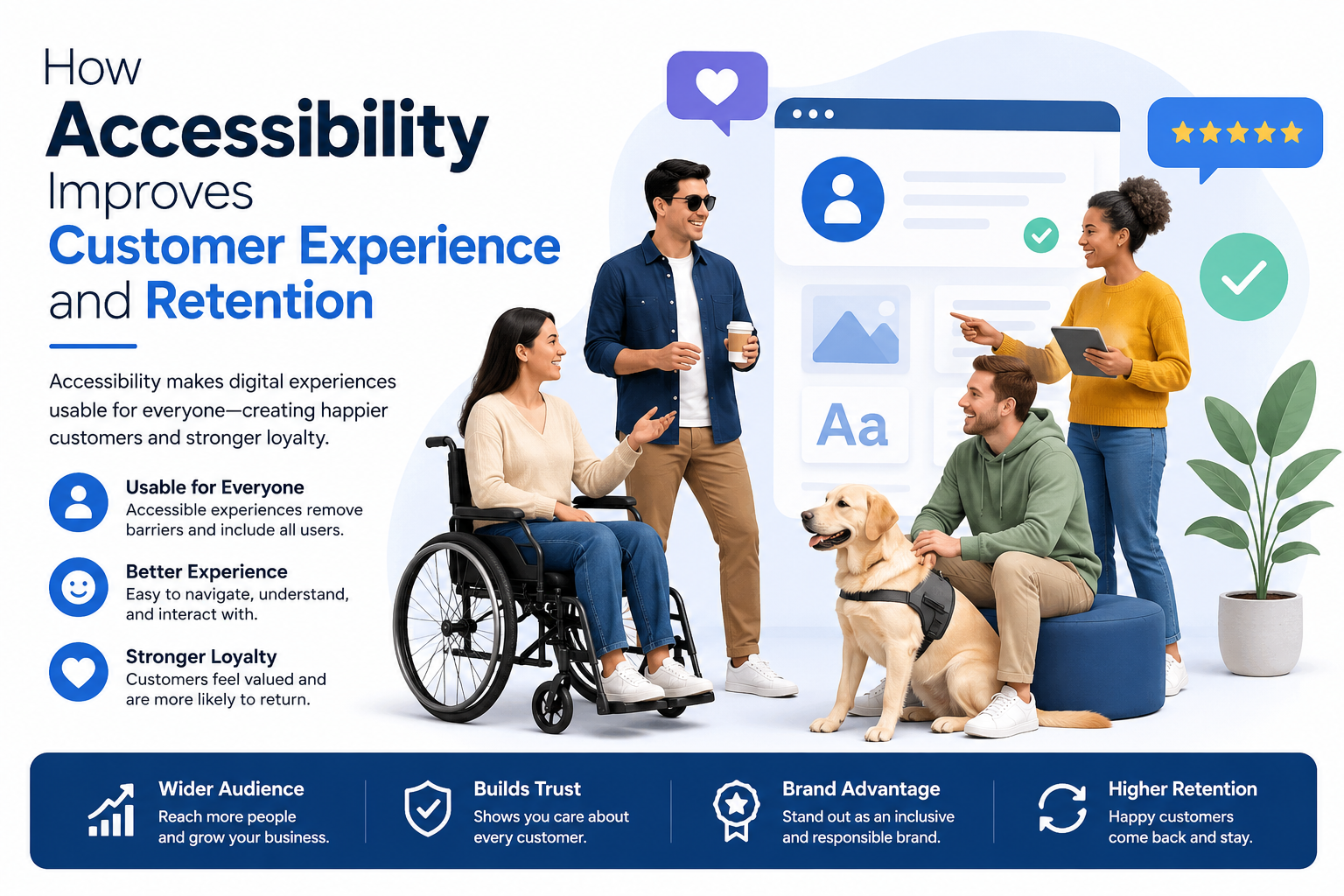
When you use a website or an app, you expect things to just work. Pages should load
properly, buttons should be easy to tap, and information should be clear without effort. But
that is not the reality for everyone.
A large part of the global population lives with some form of disability. In fact, over 1.3
billion people worldwide face challenges that can affect how they interact with digital
platforms. That is nearly 1 in every 6 people.
Accessibility looks at this gap and tries to close it. It focuses on making digital experiences
usable for everyone, not just a certain group. In this blog, we are taking a look at what
accessibility really means in customer experience, how it improves user interactions, and
why it plays a direct role in keeping customers coming back.
What is Accessibility in Customer Experience?
Accessibility in customer experience means designing websites, apps, and digital services in
a way that everyone can use them without difficulty. This includes people with visual,
hearing, motor, or cognitive challenges. It covers things like readable text, clear navigation,
screen reader compatibility, and simple interactions. When accessibility is done right, users
do not feel excluded or frustrated. Instead, they can move through your platform with ease,
just like any other customer.
How Accessibility Enhances Customer Experience
Here’s how accessibility improves the way customers interact with your brand:
- Easier Navigation and Usability
When a platform is accessible, everything feels more straightforward. Menus are clearly
structured. Buttons are easy to identify. Content is readable without strain. Users do not
have to guess what to do next. This reduces confusion and helps people complete tasks
faster, whether they are browsing, signing up, or making a purchase. - Improved Customer Satisfaction
When users can access your platform without barriers, their overall experience improves.
They are less likely to feel stuck or frustrated. This creates a sense of comfort and reliability.
Over time, this positive experience shapes how they view your brand. - Wider Audience Reach
Accessibility opens your platform to a larger audience. It includes not just people with
disabilities, but also older users, people using slower internet, or those accessing your site
on different devices. By making your platform inclusive, you are naturally expanding your
reach without extra marketing effort.
The Role of Accessibility in Customer Retention
Accessibility does not just bring users in. It also plays a big role in keeping them.
- Enhanced User Experience (UX) for All
Accessibility improvements often benefit everyone, not just a specific group. Clear layouts,
readable fonts, and smooth navigation make the experience better for all users. When
people find your platform easy to use, they are more likely to return. - Building Trust and Emotional Connection
When a brand makes the effort to be inclusive, users notice it. It shows that you care about
their experience. This builds trust over time. People feel respected and valued, which
creates a stronger emotional connection with your brand. - Reducing Friction and Frustration
Small barriers can push users away. A button that does not respond properly or text that is
hard to read can be enough for someone to leave. Accessibility removes these obstacles. It
allows users to complete their journey without interruptions, which increases the chances
of them coming back. - Personalized and Seamless Experiences
Accessible platforms often support different ways of interaction. Users can adjust text size,
use assistive tools, or navigate through alternative methods. This flexibility creates a more
personalised experience, where users can interact in a way that suits them best.
How to Implement Accessibility to Improve Customer Experience and Retention
Here’s how you can start making your platform more accessible: - Conduct a Comprehensive Accessibility Audit
Start by reviewing your current platform. Identify areas where users might face difficulty.
This includes checking navigation, readability, and compatibility with assistive tools. Many
businesses use an end to end digital accessibility solution to get a clear picture of what
needs improvement and how to fix it. - Integrate Accessibility into the Design Process
Accessibility should not be added at the end. It needs to be part of your design thinking
from the beginning. When designers and developers consider accessibility early, it becomes
easier to build a platform that works well for everyone. - Invest in Ongoing Training and Education
Teams need to understand why accessibility matters. Regular training helps designers,
developers, and content creators follow better practices. This ensures accessibility is not
treated as a one-time task but as an ongoing effort.
- Listen to Users and Act on Feedback
Your users can tell you what is working and what is not. Pay attention to feedback,
especially from users who face accessibility challenges. Their input can help you make
practical improvements that actually matter. - Communicate Your Accessibility Commitment
Let your users know that accessibility is important to you. This could be through a dedicated
accessibility statement or updates about improvements. Being transparent builds trust and
shows that you are serious about inclusion.
Closing Thoughts
Accessibility is not just a technical requirement. It shapes how people experience your
brand. When users can interact with your platform easily, they feel more comfortable
staying, returning, and even recommending it to others.
By making accessibility a part of your strategy, you are not only improving usability but also
building stronger relationships with your customers.